Last updated November 21, 2026
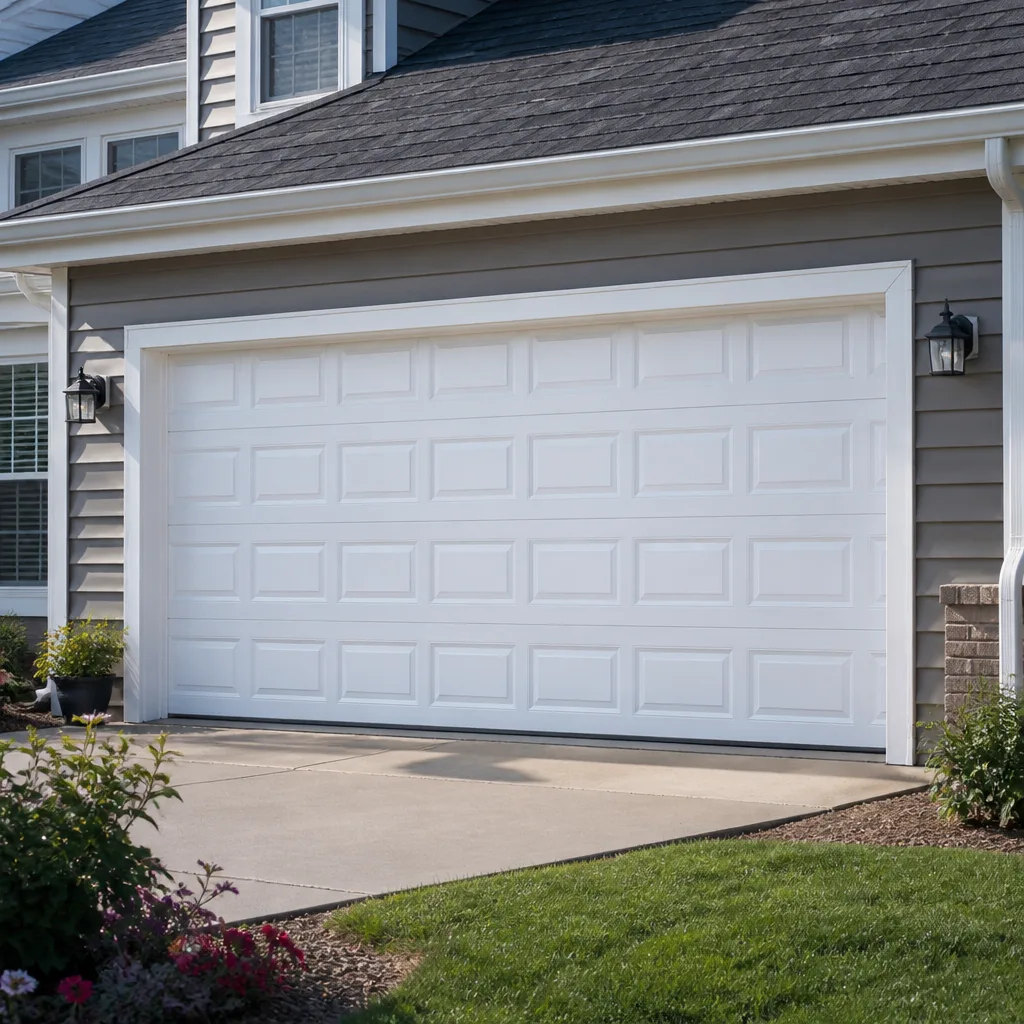 Raised-panel steel
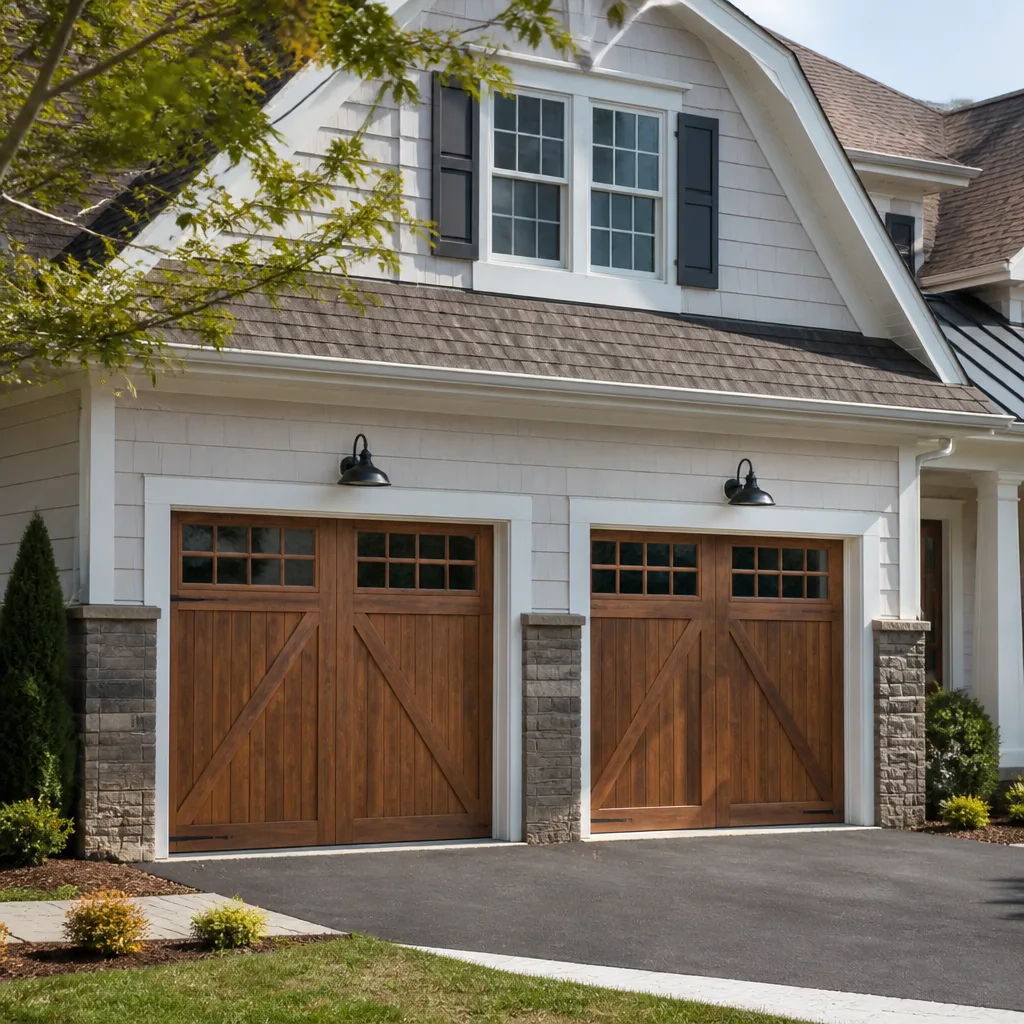 Carriage house
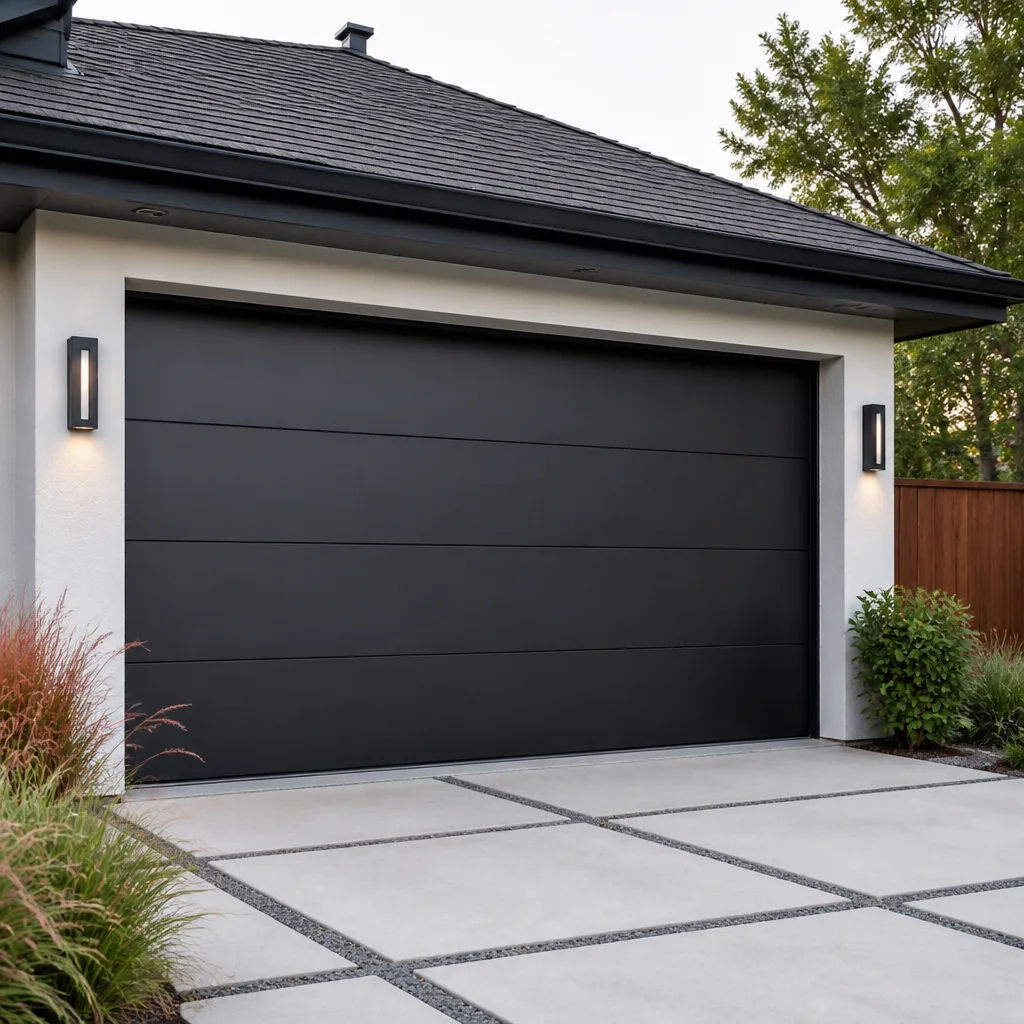 Modern flush
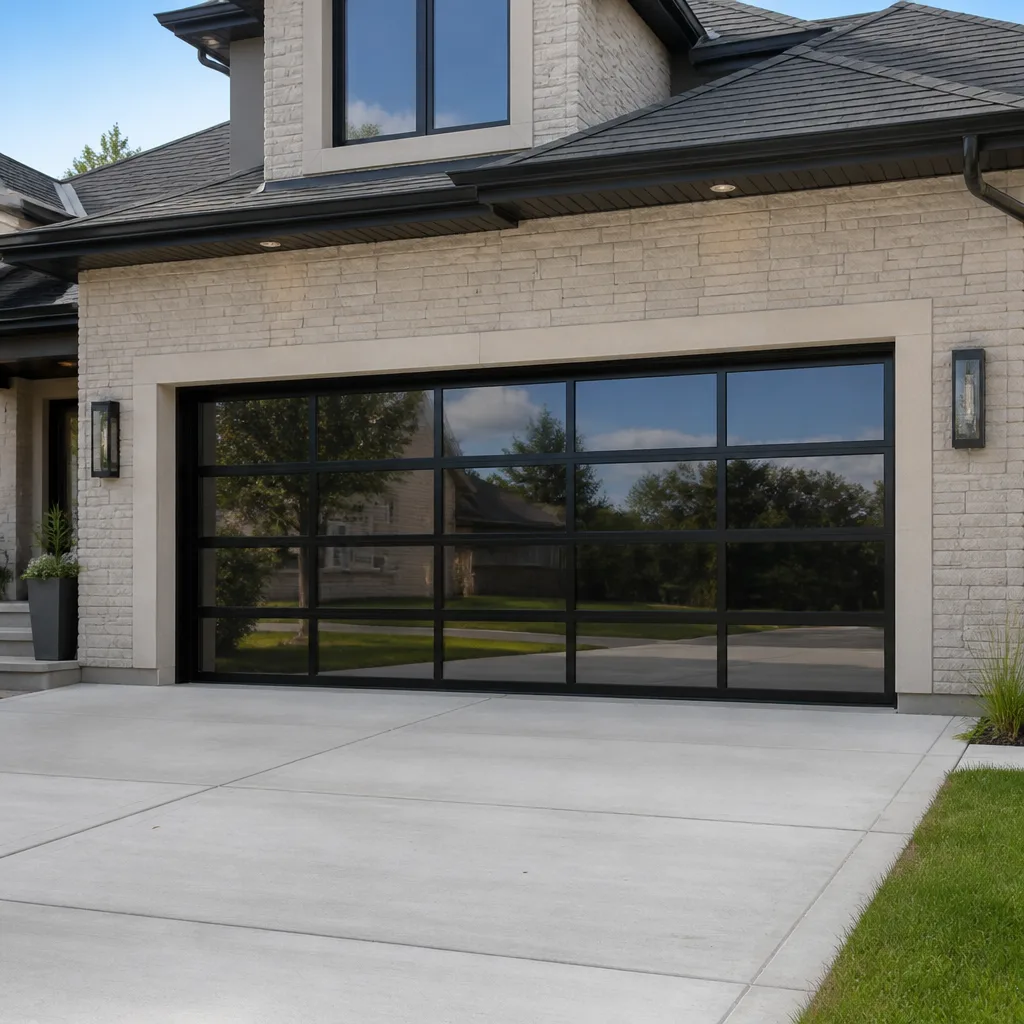 Full-view glass
 LiftMaster openers
 Chamberlain openers
Full 25-point door and opener safety check with every visit - springs, cables, rollers, tracks, and your LiftMaster or Chamberlain opener included
You get a price before we start. It does not change when the pro arrives.
Get your free estimateGarage Door Warning Signs: A Linden Hills Homeowner’s Reference Guide
A door that shudders slightly on the way up isn’t a quirk. In our experience, that small stumble usually traces back to a cable tension imbalance that’s overloading one side of your torsion spring. Left alone, that imbalance keeps working on the spring and the cable every time the door cycles, and the failure that follows is the expensive kind. Most garage door breakdowns don’t arrive out of nowhere. They build through a sequence of symptoms over weeks or months, and the stage you catch them at decides whether you’re looking at a small adjustment or a full replacement. This guide maps those symptoms to the parts behind them, so you can read what your door in Linden Hills is telling you before it stops telling you anything at all.
Quick Answer
Garage door warning signs fall into a predictable order: unusual noise, then visible imbalance, then sagging or a gap, then a door that won’t move. Noise and minor imbalance are usually an adjust-within-a-week problem, while a gap between panels, a snapped spring, a hanging cable, or a door that drops on its own means stop operating it and get a trained technician out. Catching the early stages in Linden Hills usually keeps a repair small instead of turning it into a spring-and-cable job. When a symptom lands in the dangerous tier, that’s a safety call, not a tune-up.
Styles & brands we work with
- Raised-panel steel
- Carriage house
- Modern flush
- Full-view glass
- LiftMaster openers
- Chamberlain openers
Table of Contents
- The Warning Sign Sequence: Why Order Matters
- Reading the Visual Signs: What Each Symptom Points To
- The Sound Diagnostic Guide: Grinding, Popping, and Binding
- Response Urgency Tiers: Fix This Week vs. Stop Now
- Symmetry Checks That Catch Problems Before They Show
- The Three Signs Linden Hills Homeowners Dismiss as Normal
- How Twin Cities Seasons Work on a Garage Door
- Common Mistakes to Avoid
The Warning Sign Sequence: Why Order Matters
Garage doors don’t fail in a single dramatic moment. The mechanical parts wear in a chain, and each link produces a symptom. The clever part is learning the chain, because the symptom you notice tells you how far along the wear already is.
Here’s the sequence we see most often:
- Sound changes first. A door that’s been quiet for years starts to grind, creak, or bang. The rollers, the opener gear, or the spring are the usual suspects, and at this stage the fix is often cheap.
- Imbalance shows next. The door lifts unevenly, lags on one side, or reverses before it reaches the top. Cable tension on one side is drifting, which strains the spring on the other.
- Visible distortion follows. Panels start to gap, the door sags when it’s halfway up, or a track bows out. The structure is now absorbing strain it wasn’t built to carry.
- Failure arrives last. A spring snaps, a cable jumps its drum, or the door drops. At this point the door isn’t safe to operate.
Why does the order matter? Because the cost of repair climbs with every stage. A noise caught early is a roller or a gear. A sagging section caught mid-sequence is a track and cable adjustment. The same door caught at stage four is a full spring-and-cable rebuild or a new section. Linden Hills homes tend to be older, and older doors have often already been through several cycles of wear, so the sequence can move faster there than on a newer install.
Reading the Visual Signs: What Each Symptom Points To
Visual symptoms are the most reliable because you can actually see them from the driveway. Each one maps to a specific component. Here’s the mapping we walk homeowners through:
- A horizontal gap opening between panels means the section above or below has shifted on its hinge. The hinges are fatigued or the section is bent, and the strain gets passed along to the track.
- A door that sags on one side when it’s raised points to unequal cable tension. One cable is doing more work than the other, and the torsion spring above is being loaded unevenly as a result.
- A rust line running down a rail or track usually means water is getting in at that seam. That’s a roller or bearing seizing, and it will start to grind the track before long.
- Bowed or wavy track is a sign the door has been hitting it, which happens when a roller is out of its groove or a hinge has come loose. Don’t ignore this one; the track will keep bending.
- A small gap at the bottom seal could be weatherstrip wear, or it could be a slightly warped bottom panel. If the gap is wider on one side, suspect the panel.
One habit worth building: step into the garage and glance at the door from inside, looking up along both tracks and across the panel seams. From that angle, a sag or a bowed track that looks perfectly fine from the driveway shows up clearly. Homeowners in Linden Hills who check this once a month tend to catch the stage-two problems before they become stage-four ones.
The Sound Diagnostic Guide: Grinding, Popping, and Binding
Sound is the earliest warning the door gives you, and it’s also the most misunderstood. The noise pattern tells you which part of the system is in trouble. Learn to tell these apart and you’ll know what you’re dealing with before anyone touches the door.
Grinding
Grinding is a metal-on-metal sound, usually coming from the opener or from a roller that’s seized. If the grind tracks with the opener motor, suspect the opener’s drive gear – a plastic gear inside the unit that wears down over time. If the grind tracks with the door’s movement and comes from a specific spot along the track, it’s a roller or the track itself. Craftsman and LiftMaster openers both use drive gears that eventually wear, and a grind in the motor is worth diagnosing rather than ignoring.
Popping
Popping is the sound of a spring coil shifting under load, or of a torsion spring beginning to fatigue. It often happens at one point in the door’s travel, usually near the top or bottom. A single pop you hear once and never again may be a coil settling. A pop that repeats on every cycle means the spring is losing tension and needs to be checked. Because a torsion spring holds a serious amount of stored energy, this is one sound you don’t want to keep ignoring.
Binding and Squealing
Binding sounds like the door is fighting itself – a scrape or a tight, labored noise as it lifts. That’s usually a roller that’s out of its track or a hinge that’s grinding against a panel. Squealing is often the same problem in its earlier stage, or a roller that needs lubrication. On a Raynor or Chamberlain system, binding at a specific height points to a hinge or a track alignment issue at that spot.
The takeaway: match the sound to the moving part, and you’ll usually be right about which component is behind the symptom. If the noise is a pop or a bang near the spring, treat it as urgent.
Response Urgency Tiers: Fix This Week vs. Stop Now
Not every warning sign needs the same response. Sorting them into tiers keeps you from panicking over a small issue or ignoring a dangerous one. Here’s how we categorize them.
Tier 1: Fix within a week
- A single squeak or creak that appears at one point in the travel
- Slightly uneven lifting, but the door still fully closes
- A loose or rattling panel, with no gap between sections
- Roller wear or a rust line on a track
- An opener that reverses once and works fine on the next try
Tier 1 problems usually get cheaper the sooner they’re addressed. Ignoring them pushes them into Tier 2.
Tier 2: Stop operating the door and get it looked at
- A gap opening between panels
- A door that sags visibly when it’s halfway up
- Popping or banging near the spring
- A door that reverses or stops partway down
- Grinding that’s getting louder on every cycle
Tier 2 is where a spring or cable is actively failing. Every cycle adds more strain to the same weak point.
Tier 3: Do not operate the door at all
- A snapped torsion spring
- A cable that’s jumped its drum or is hanging loose
- A door that drops on its own or won’t stay open
- A visibly bent or separated track
- Any injury risk from a door that won’t balance
Tier 3 is a safety situation. A door in this category can fall on a person, a pet, or a vehicle, and a loose cable under tension is a genuine hazard. Keep everyone clear and call for trained help. The reasoning behind the tier is simple: when the counterbalance system is compromised, the door’s full weight is being held by parts that are no longer up to the job.
Symmetry Checks That Catch Problems Before They Show
Most warning signs show up after the wear has already started. The trick is to catch imbalance before there’s any symptom to see. Garage doors are symmetrical by design, and comparing one side to the other is the simplest early-warning system there is. Do these checks with the door closed and, where you can, again at the halfway point.
- Compare cable tension side to side. With the door down, look at both cables coming off the drums. They should be equally taut. If one looks slack and the other looks tight, tension is drifting and the spring is being loaded unevenly.
- Compare the spring gaps. If you have a pair of torsion springs, check that both coils look identical – same number of visible gaps, same spacing. A mismatch means one spring is doing more work than the other.
- Check track plumb. Stand a level against each vertical track, or sight down its edge. Both tracks should be parallel and equally spaced from the door. A track out of plumb on one side will pull the door into it.
- Compare panel alignment. Sight across the seams between panels. Both sides should line up evenly. A step on one side means a hinge or a cable is already out of balance.
- Test the balance. With the opener disconnected (if you have a manual-release handle), lift the door halfway by hand and let go. It should stay put. A door that sinks or rises on its own means the spring is out of adjustment.
These checks take a few minutes and catch the stage-two problems before they become visual. We’ve found that homeowners who do them monthly in Linden Hills spot the small imbalances early, when the fix is usually a light adjustment rather than a rebuild.
The Three Signs Linden Hills Homeowners Dismiss as Normal
Some symptoms get waved off because they seem minor or because they’ve been there so long they feel normal. In our experience, these three are the ones that most often precede a spring or cable failure. If any of them is going on in your garage, it’s worth a closer look.
1. A slight shudder on the way up
Homeowners describe this as the door “wobbling” a little as it rises. It’s easy to write off as a quirk of an old door. It’s actually the most reliable early signal of a cable tension imbalance, and because it feels so minor, it’s the one most often ignored. The shudder is the door telling you the load isn’t evenly shared.
2. A door that’s slightly heavier at the top
If lifting the door by hand (with the opener released) feels like it takes more effort near the top than the bottom, that’s a spring losing tension. It gets dismissed as “the door has always been a little heavy.” A door that’s properly balanced should feel almost weightless at every point in its travel. A heavy top end means the torsion spring is weakening.
3. A faint rust streak or a light squeal on one side
A small rust line along one track or a faint squeal from one side is often chalked up to age. It’s usually a roller or bearing seizing. A seized roller adds drag to one side, which pulls the cable out of balance, which strains the spring. Left alone, that’s how a small rust line turns into a snapped spring.
All three are cheap to fix when they’re caught as Tier 1 issues. They’re the exact signs that push a repair from a small adjustment into a spring-and-cable job if they’re left sitting for a season or two.
How Twin Cities Seasons Work on a Garage Door
Linden Hills sits in a climate that puts a garage door through real seasonal swings, and those swings show up in the warning signs. The freeze-and-thaw cycle is the big one. Moisture gets into seams, rollers, and hinges, then freezes and expands. Come spring, parts that were fine in the fall can be seized or misaligned.
Metal also expands and contracts with temperature, and that movement works at the same joints the door relies on to keep its alignment. That’s why a door that felt smooth in September can feel stiff and noisy by February. The torsion spring, in particular, is under constant load and works through thousands of cycles over a single winter of daily use. Cold weather makes the spring slower to recover and adds stress at exactly the point where a coil is already fatigued.
For Linden Hills homeowners, the practical takeaway is to run the symmetry checks in late fall and again in early spring, the two moments when temperature is changing fastest. A door that’s balanced in autumn is more likely to survive the winter without a cable issue. A door that’s already slightly out of balance before the cold sets in tends to be the one that fails.
If a symptom turns up that you can’t place – or one that’s getting worse – that’s the point to get it looked at rather than wait for the season to turn. Our Garage Door Repair Linden Hills service is the place to start when you’re not sure what you’re hearing.
Common Mistakes to Avoid
- Calling a shudder “normal.” A door that wobbles on the way up is telling you the load is unbalanced. It’s the first stage of the sequence, and it’s the cheapest one to fix.
- Lubricating a seized roller instead of replacing it. A seized roller won’t recover from grease. The drag stays, and the drag is what pulls the cable out of balance. Replace it, don’t just lube it.
- Operating a door with a hanging cable. A cable under tension can cause a serious injury. A door in this condition belongs in the no-operate tier – keep everyone clear and call a professional.
- Ignoring a gap between panels. A small gap at the seams doesn’t seal itself up. It’s the first visible sign that a hinge is failing, and the door keeps pushing on it every cycle.
- Treating a grinding opener as a door problem. A grind from the motor is a drive-gear issue inside the opener, not a door alignment problem. Misdiagnosing it wastes a repair on the wrong part.
- Skipping the fall and spring symmetry checks. Twin Cities weather swings load the door hardest at the change of seasons. Those are the two moments worth a careful look at both sides.
- Waiting for a spring to “give out” before doing anything. A fatigued spring gives plenty of warning – pops, a heavy top end, uneven lifting. Act on the warning; don’t wait for the failure.
If any of these sound familiar, our team can take a look and tell you what stage you’re at. We work on the full door and opener system, so a single garage door repair visit covers both.
See the difference
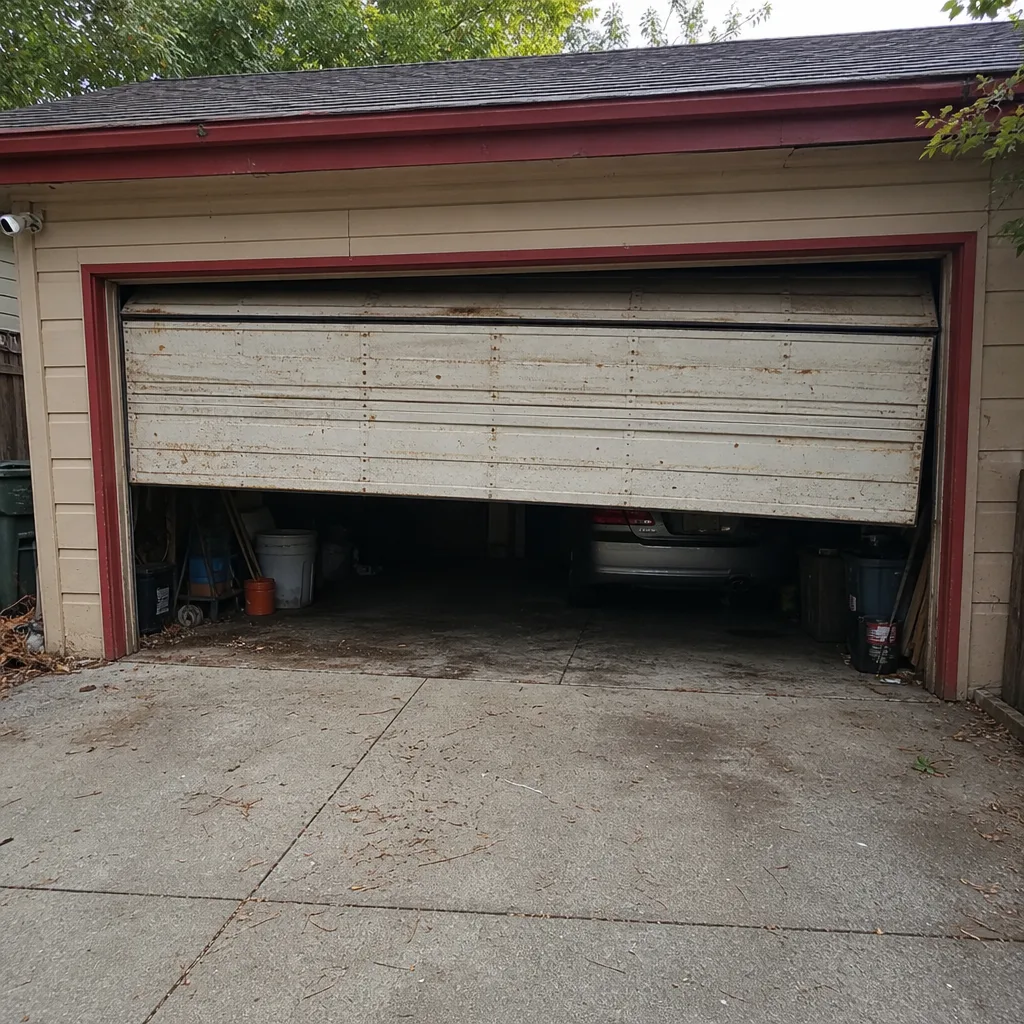 Before
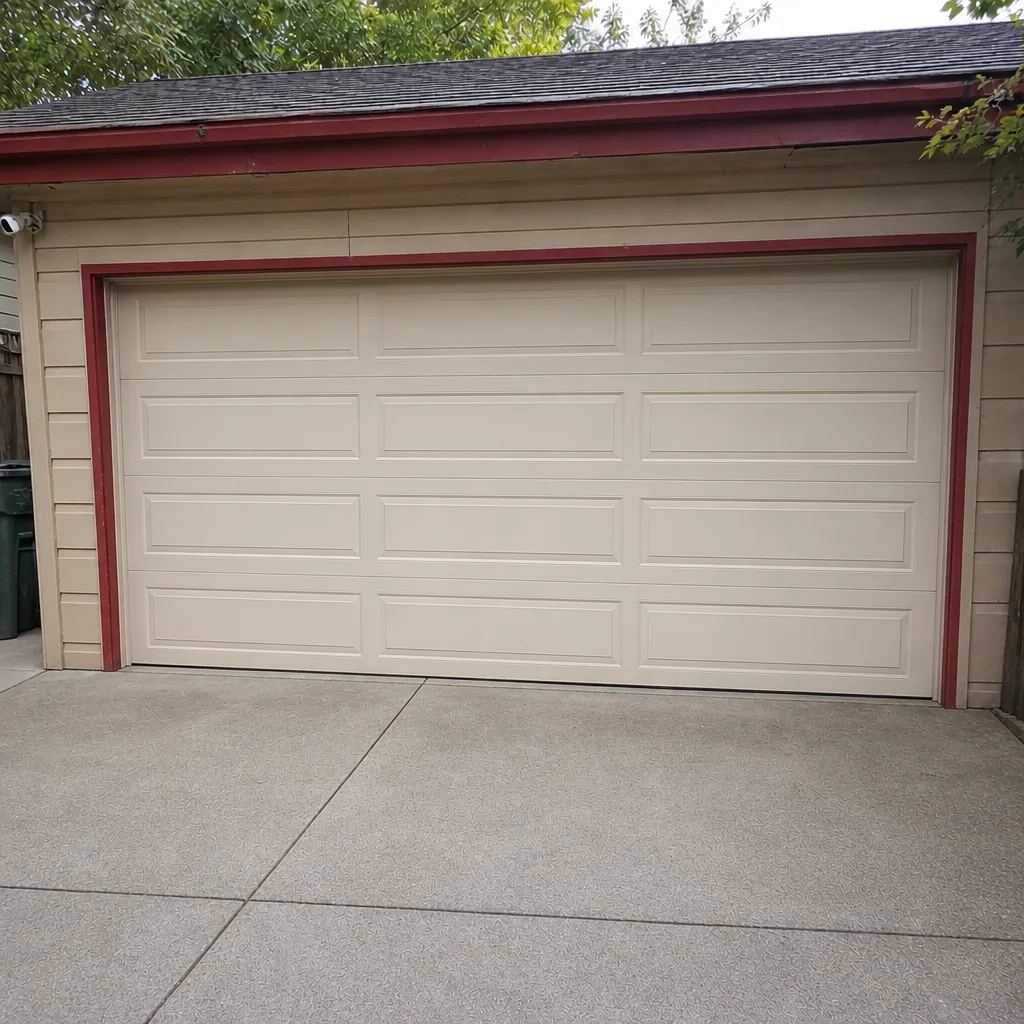 After
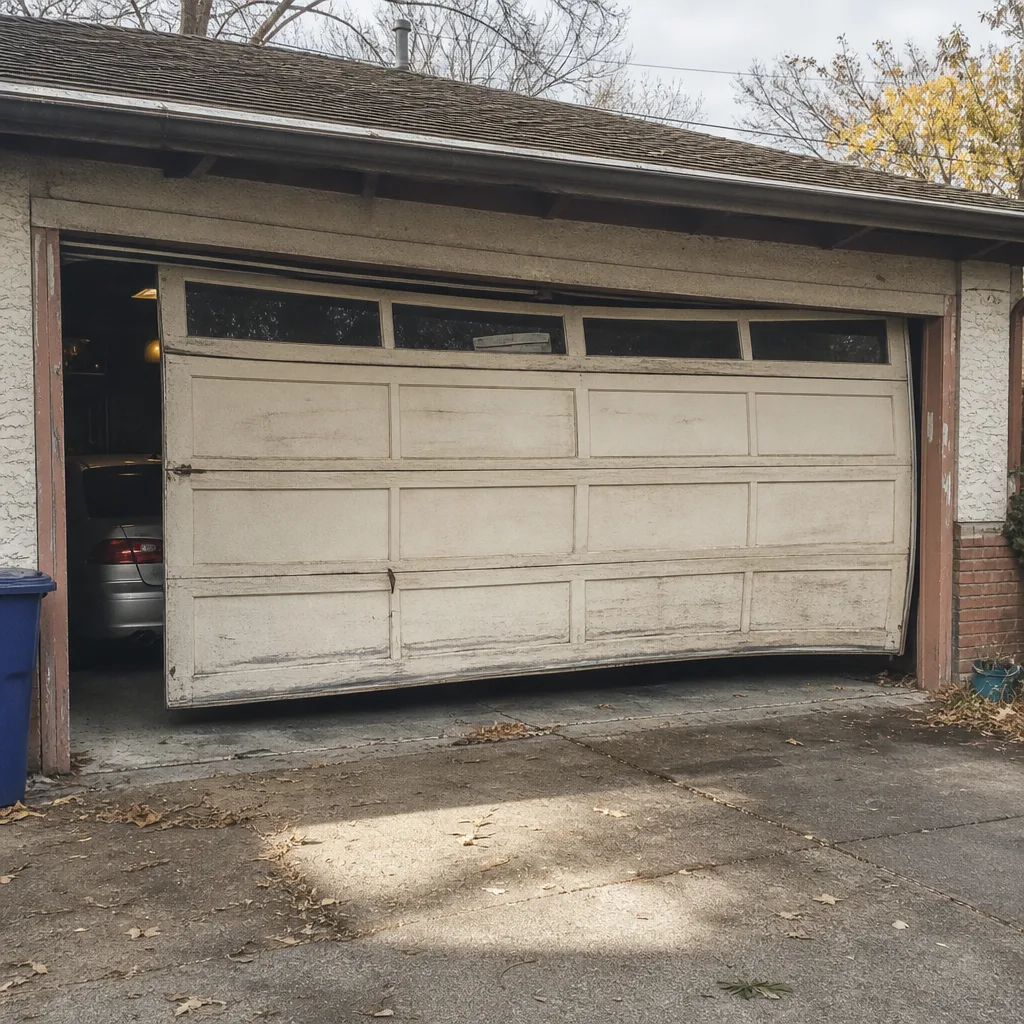 Before
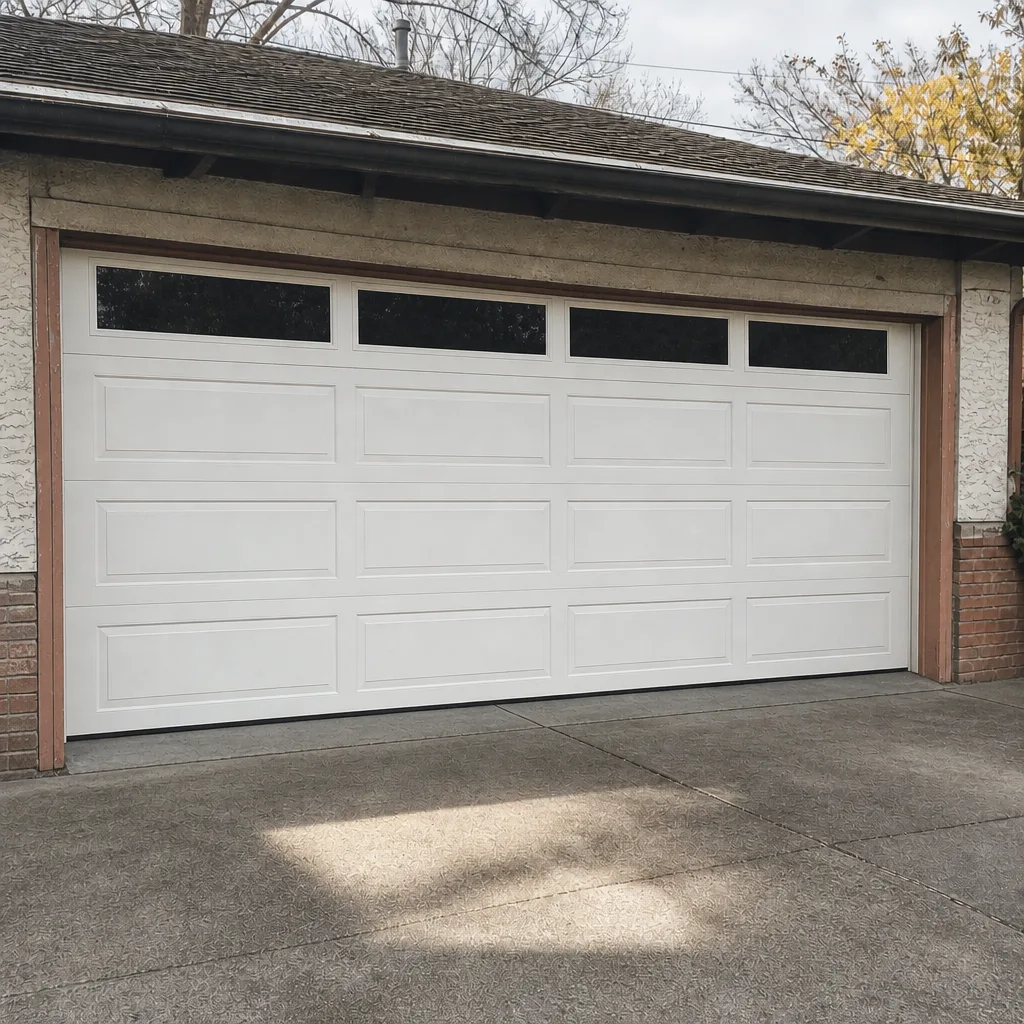 After
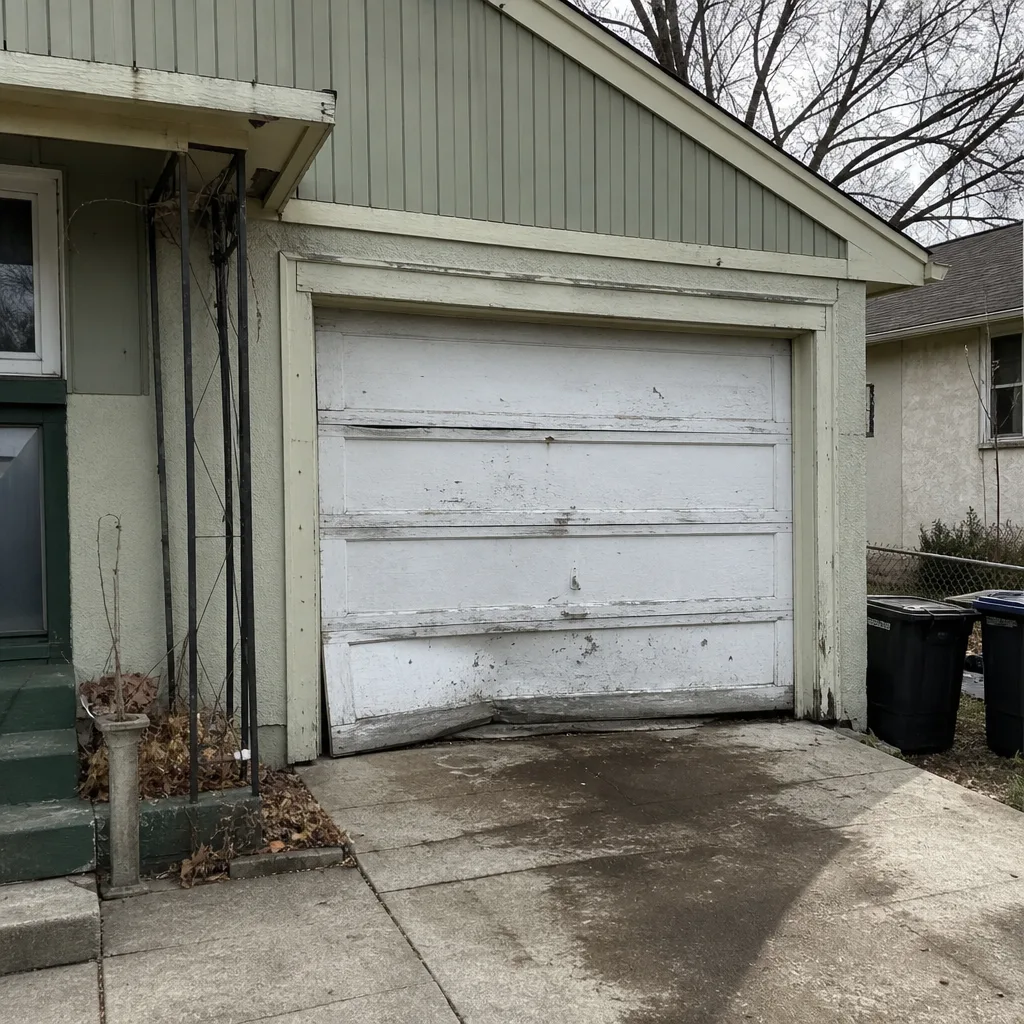 Before
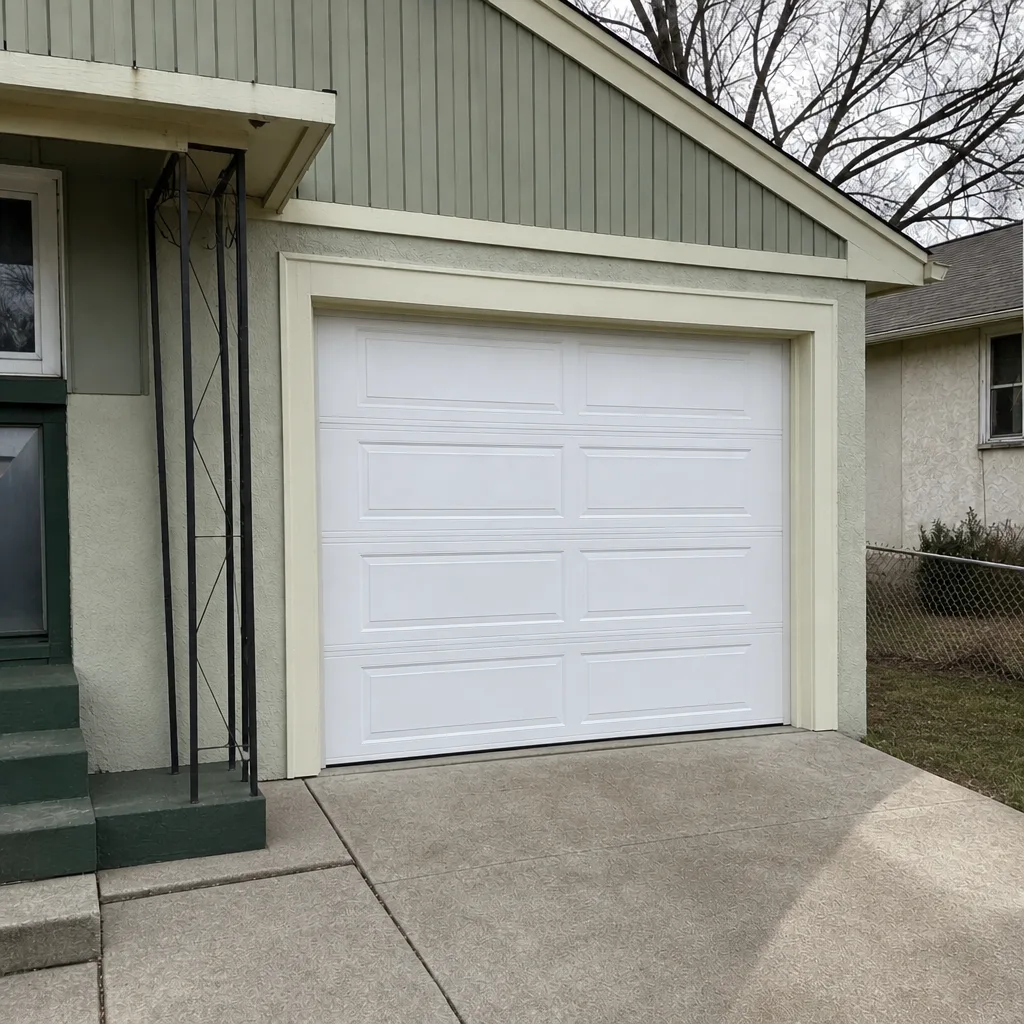 After
When to Call a Professional
Call a professional when any symptom lands in Tier 2 or Tier 3: a gap between panels, a sag, popping near the spring, a hanging cable, or a door that won’t stay open. Those point to a failing spring or cable, and those parts are under stored tension that makes them dangerous to handle. Tier 1 symptoms – squeaks, slight imbalance, a loose panel – are also worth a call if they don’t resolve with a light adjustment or if they’re getting worse. Our technicians have up to 12 years of experience and work on both the door and the opener, so you’re not coordinating two contractors. Garage Door Repair Linden Hills offers free estimates in Linden Hills – call (855) 710-3186. Every job starts with a written price you agree to before any work begins.
Frequently Asked Questions
The most common warning signs are unusual noise, uneven lifting, a door that shudders or wobbles on the way up, a gap between panels, a sag when the door is halfway up, and a heavy top end when lifting by hand. These usually appear in that order, and catching them early keeps the repair small. If any of them is getting worse, call (855) 710-3186 – estimates are free.
Stop using the door if a spring has snapped, a cable is hanging or has jumped its drum, the door drops on its own, a track is visibly bent, or the door won’t stay in balance. These are Tier 3 signs, and the counterbalance system is no longer doing its job. Keep people clear and get a trained technician out. Call (855) 710-3186 for help.
Grinding that comes from the motor unit itself points to the opener’s drive gear, while binding or grinding that tracks with the door movement and comes from the track points to a roller or track issue. Run the opener and listen to where the sound originates. If you’re not sure, a garage door opener repair visit will pin it down – call (855) 710-3186.
Check it in late fall and early spring, and again any time you notice uneven lifting. Twin Cities freeze-and-thaw swings work on the door’s seams and joints hardest at the change of seasons, so those are the two moments worth a careful side-to-side check. If one cable looks slack, call (855) 710-3186 before the imbalance strains the spring.
Often yes, if it’s caught early. A shudder is usually a cable tension imbalance, and if the spring and cable are still sound, the fix is an adjustment rather than a replacement. Left long enough, the imbalance strains one side of the spring until it fatigues, which turns it into a bigger repair. Call us for a free estimate and we’ll tell you what stage you’re at.
No. We quote the price and agree it with you before any work starts, and the written estimate sets the final price. If we find an additional issue while we’re on the job, we’ll tell you what it is and quote it before touching it – no surprises on the invoice. Call (855) 710-3186 for your free estimate.
The Bottom Line
Garage door failures follow a sequence, and the warning signs arrive in a predictable order: noise first, then imbalance, then visible distortion, then breakdown. The stage you catch them at decides the cost and the risk. Sound changes and slight imbalance are usually fix-a-week problems; gaps, sags, and popping near the spring are stop-and-check problems; snapped springs and hanging cables are no-operate situations. Run the symmetry checks twice a year, watch for the three signs homeowners dismiss as normal, and act on what the door tells you. If something’s off and you’re in Linden Hills, we’re here to take a look. Whether you’re facing a repair or planning a new garage door installation, call Garage Door Repair Linden Hills at (855) 710-3186 for a free estimate.
Written by the team at Garage Door Repair Linden Hills.